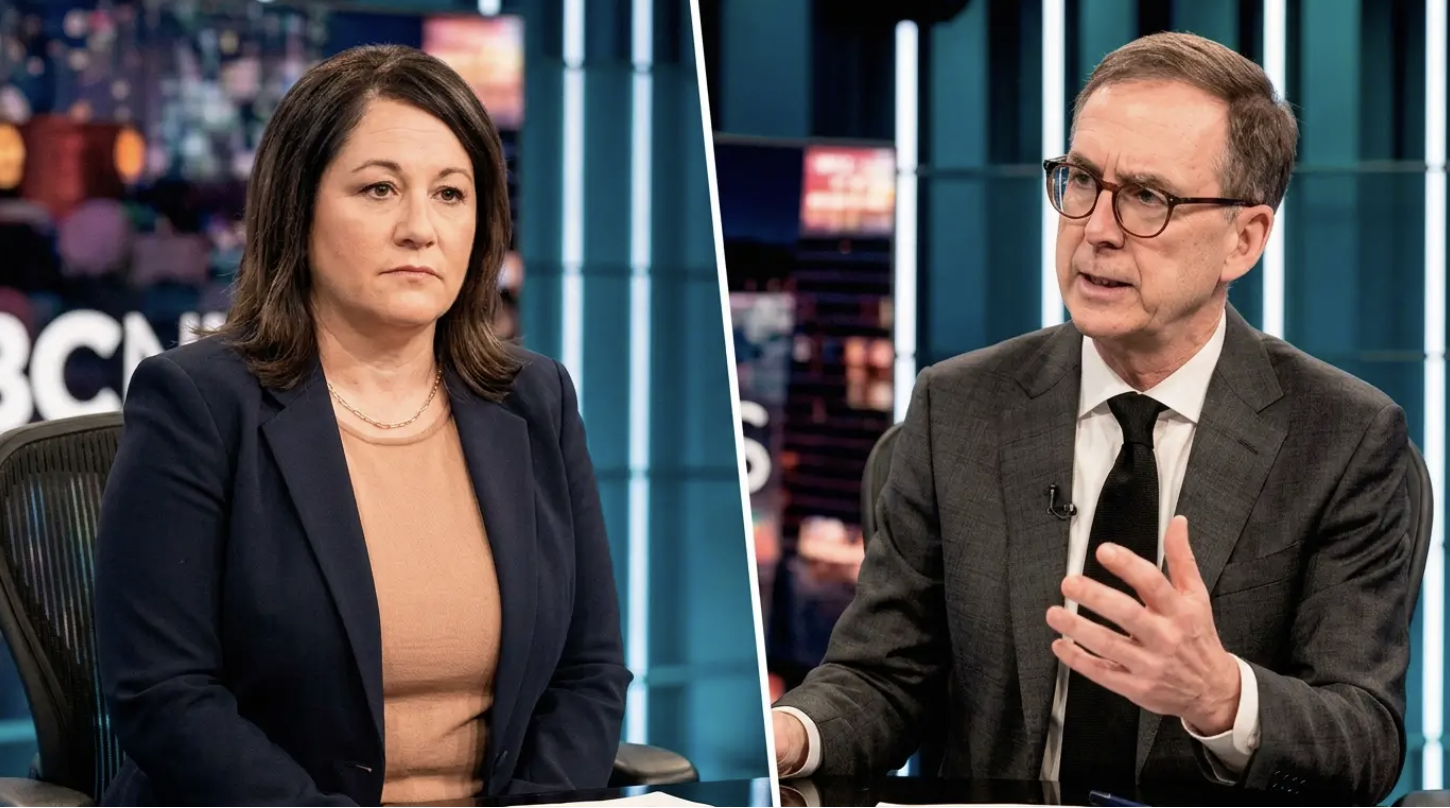
It was supposed to be a measured, 12-minute segment on interest rate policy. Instead, what unfolded on CBC's The National on the evening of July 26 became the most-watched clip in the program's history — a raw, unscripted confrontation between a visibly frustrated Bank of Canada Governor and an anchor who refused to let carefully rehearsed talking points pass unchallenged.
By the time Tiff Macklem removed his microphone and walked off set with six minutes still remaining on the scheduled segment, the clip was already spreading across every major social media platform in Canada. By midnight, it had been viewed more than four million times.
"You are robbing Canadian families. You sat here two years ago and told us rates would come back down quickly. They didn't. And now you want us to congratulate you for holding?"
— CBC The National anchor, live broadcast, July 26, 2026
The segment had been arranged to discuss the Bank of Canada's decision earlier that month to hold its overnight rate at 2.75% — a choice that, while widely expected by markets, has continued to inflame public opinion amid persistent affordability pressures in Canada's major cities. What the Bank's communications team had not anticipated was the anchor's decision to abandon the pre-agreed question framework and pivot directly to the human cost of the rate cycle.
The Exchange That Broke the Broadcast
The confrontation began approximately four minutes into the interview, when the anchor placed a series of printed letters on the desk in front of her — correspondence from viewers across Canada. She began reading them aloud. A single mother in Brampton, Ontario, whose variable-rate mortgage had more than doubled since 2021. A retired couple in Kelowna, British Columbia, who had been forced to return to part-time work to cover the interest on a home equity line of credit. A 34-year-old teacher in Halifax who had abandoned plans to buy a first home entirely.
Macklem responded with the Bank's standard language around "price stability as the foundation of long-term prosperity." The anchor pressed further. Macklem reiterated. The anchor leaned forward.
"Governor, with respect, I didn't ask about long-term prosperity. I asked about this family. Right now. Tonight."
— CBC The National anchor
What followed was thirty seconds of silence that felt, to viewers across the country, considerably longer. Macklem looked down at the desk. He adjusted his notes. When he finally responded, his voice carried an edge that departed sharply from the measured cadence the Bank of Canada cultivates in all public communications.
The key exchange, as confirmed by CBC's transcript:
Anchor: "Do you accept that the rate decisions made by the Bank of Canada between 2022 and 2024 caused direct, measurable harm to millions of Canadian families?"
Macklem: "I accept that monetary policy involves difficult trade-offs—"
Anchor: "That's not what I asked."
Macklem: "I think this line of questioning is—" [pause] "I think we're done here."
What Happened After Macklem Left the Set
The minutes that followed Macklem's departure were, by any measure, unprecedented in the 44-year history of The National. The anchor remained at the desk, visibly composed, and addressed viewers directly while a CBC producer could be seen in the background speaking urgently into a headset. The segment continued for its full allotted time — without the Governor.
Sources inside CBC News confirmed to Plauste that Macklem's communications director attempted to intervene during the commercial break preceding the segment's final question block, requesting that the program cut to a pre-recorded package. The request was declined by the program's executive producer.
Bank of Canada communications staff issued a statement at 10:47pm Eastern, describing the interview as having "deviated substantially from the agreed format" and stating that the Governor had "chosen to conclude his participation when it became clear the segment had moved beyond the scope of monetary policy discussion." The statement was widely mocked on social media, where users noted that the Governor of a central bank declining to discuss the human impact of interest rate decisions was, in itself, a form of policy communication.

Continue Reading — Plauste Premium
This article continues with exclusive reaction from Bay Street economists, analysis of the political fallout, and what Macklem's departure signals about the Bank of Canada's communication strategy ahead of the next rate decision.


